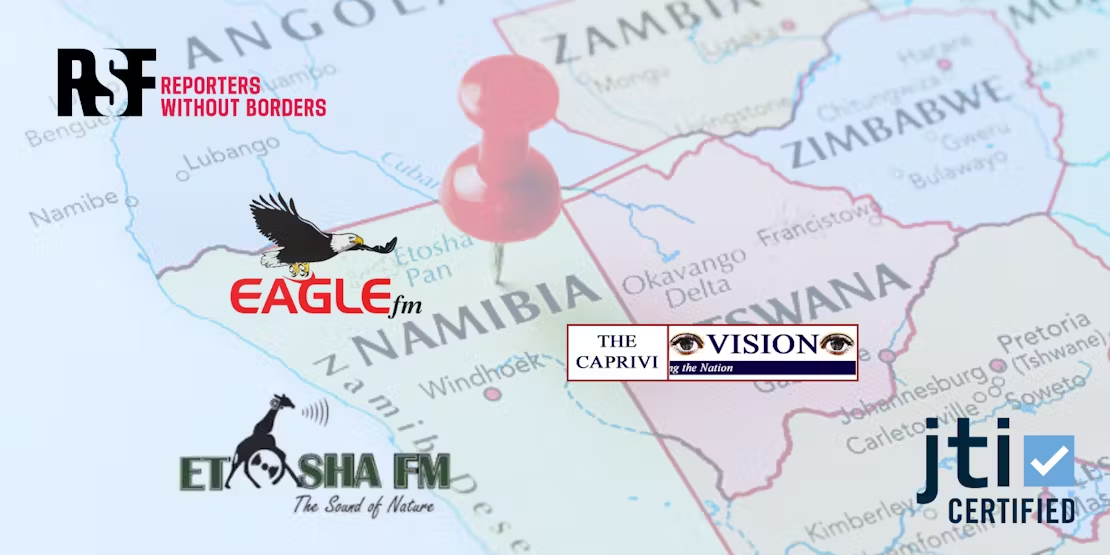
Ten media outlets in Namibia reinforce their commitment to transparency, ethics and professionalism in their journalistic processes thanks to Journalism Trust Initiative (JTI), an international quality standard for news organisations launched at the initiative of Reporters Without Borders (RSF). Three of them share their experience and lessons learned from the self-assessment they did with JTI, and how it helps restore trust with the public and combat disinformation.
The path to JTI certification is a rigorous process designed to ensure media compliance with the standard’s criteria, while also serving as an opportunity for transformation. “The self-assessment process has helped our media house to uphold journalistic accountability, professionalism and a major cultural shift within the team” declared Getrud Hoases, Station Manager of community radio Etosha FM, that joined the initiative alongside The Namibian, Eagle FM, Caprivi Vision, Ohangwena Community Radio, One Africa TV or Otji FM.
“For example, the station is in the process of introducing a feedback system where listeners can report inaccuracies directly. One key achievement was the development of a clear editorial policy, ensuring ethical and unbiased reporting on our part. Another milestone was improved transparency in the sense that listeners now have better access to complaint mechanisms which strengthens audience trust” added Getrud Hoases.
For some, the self-assessment phase has been an eye opener as “it came as part of evaluating the papers’ weaknesses and strengths” said Risco Lumamezi, Editor of community newspaper Caprivi Vision. “We have embarked on understanding the need to have an editorial policy that serves as a guide on how we should maintain accuracy in news reporting. There were other questions that needed confidentiality, but due to accountability and transparency required by the JTI there was no room to withhold such information.”
“The JTI can provide vital support to emerging media houses dedicated to fostering national discourse in a genuine and informative manner” explained Frans Sinengela, Station Manager, Eagle FM, on the opportunities offered by JTI. “It can assist media outlets that contribute to democracy and nation-building by offering training, financial support, equipment, and capacity building. These efforts aim to enhance the dissemination of accurate information, particularly in previously disadvantaged communities, and support initiatives to improve the flow of reliable information within these communities.”
In a country where freedom of the press is firmly, historically one of Africa’s best-ranked countries in RSF’s World Press Freedom Index, “some media houses avoid reporting on sensitive political issues for fear of repercussions, including loss of government advertising or direct intimidation” commented Getrud Hoases, on the main challenges facing the Namibian media landscape. “Most media focus on urban areas, while rural communities often receive little to no media coverage, leading to information gaps. Also, the spread of fake news on social media discredits genuine journalistic efforts. Finally, the rise of free online news and social media platforms reduces the audience for traditional media, making it harder for local outlets to generate income.”