Check Your News

We check what we eat, what we wear and what we put on our skin.

We look at labels, compare products and make informed choices.

So why don't we do the same with the information we consume?
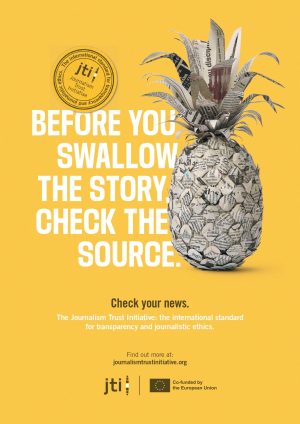
ANANAS copy

Can you identify who publishes the story? 📲

✔️ Yes, the publisher is clearly identified.
✖️ No, I can only see the social media account.
⁉️ I haven’t checked yet.

CRÈME copy

Can you find out how the story was produced? ✍️

✔️ Yes, there are named authors and clear sources.
✖️ No, there is no author nor any mention of any source.
⁉️ The headline looks professional. I guess I should trust it.

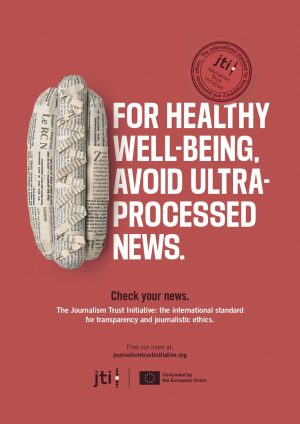
HOT DOG copy

Did someone pay for that story? 🤑

✔️ Yes, but it is clearly identified as ‘brand/sponsored content’.
✖️ I have no idea who funds the story, nor the media.
⁉️ It is going viral, anyways.

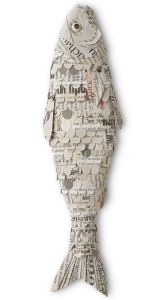
POISSON copy

Is this news or opinion? 💬

✔️ I can tell the difference thanks to the “Editorial” and “Op-Ed” label.
✖️ The outlet does not even mention if they publish opinion pieces.
⁉️ Still, it is very convincing.

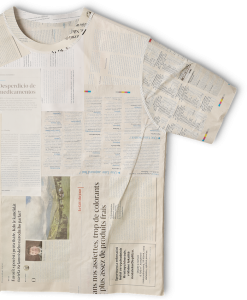
T-SHIRT copy

What happens if the outlet publishes something inaccurate? 😱

✔️ It has a visible corrections and complaints policy.
✖️ There is no way to contact the newsroom.
⁉️ I have no idea.

Journalism Trust Initiative_colour

Journalism Trust Initiative is an international standard that assesses the processes, governance and professional practices behind journalism, not the truthfulness of every individual article.

Share the campaign!

Follow us on social media and share the campaign. Hashtag #CheckYourNews !

Youtube

Instagram

LinkedIn

facebook

Telegram

Bluesky

Qwice

Mastodon

#CheckYourNews: learning how to better consume news

"We check the quality of what we eat, what we wear, and what we put on our skin. What if we did the same with news? This is the starting point of ‘Check Your News’, a campaign that takes everyday consumer behaviours – checking, comparing, choosing – and applies them to news consumption. This is precisely what JTI is all about. RSF thanks all the news media outlets around the world that have joined this collective effort and are proudly participating in the world's largest initiative to build trust in journalism."
Thibaut Bruttin
Director General, Reporters Without Borders

It seems that we are drawn to biased news for the same reasons we enjoy fatty, sugary and salty foods: they provide us with immediate pleasure. Our brains tend to favour information that aligns with our opinions and beliefs, a phenomenon known as confirmation bias. Just as we know that we should eat a balanced diet, we should regularly seek out new information that challenges our convictions. Because while excessive consumption of low-quality content provides immediate satisfaction, the negative consequences, like an unhealthy diet, will inevitably catch up with us in the long term.

These news consumption habits have now become a vicious circle, exacerbated by the economic and political interests of media outlets seeking to reach the widest possible audience in order to increase their influence or advertising revenue, as well as by major technology companies that facilitate the dissemination and amplification of “unhealthy” content. Sensationalist headlines, divisive opinions and biased information often generate more clicks than serious, balanced articles. This dynamic even drives some traditionally reliable media outlets to prioritise lower-quality content in order to remain competitive, further increasing the resulting risk of societal polarisation.

A global campaign for trustworthy journalism

The goal of this communications campaign, launched on 17 November 2026, is to begin raising awareness about the JTI among the general public, placing it alongside major international standards and quality labels such as Fair Trade and organic certifications. These international standards for products offer consumers several direct and indirect benefits. JTI similarly seeks to guarantee the reliability of the news services provided by media outlets.

The JTI is already well known within a broad international network of journalists and media outlets, their representative associations, academics, international organisations, funding bodies, and international and local public authorities. It is thanks to this community and its collective reach — particularly the audiences of the media outlets involved — that awareness of the standard can extend beyond media professionals and reach the general public.

November 5

Communications kit available, under embargo!

Briefing webinar: 2:00 PM CET (Paris time) – Registration link here!

November 17

#CheckYourNews campaign launch day!

Launch week

High-cadence campaign, with:
  • Interviews
  • Live events
  • Social media
  • Radio
  • TV
  • Pitch your idea!

December 13

Reduced pace, until the campaign resumes in 2027.

Your role

This campaign is a collective effort: the more it is shared, the further its message will reach and the more strongly it will resonate with audiences around the world. We encourage you to share the campaign across your own channels and platforms, adding your own voice and branding to reflect your relationship with JTI.

JTI-certified media outlets

Showcase your commitment. Tell your audiences why you chose JTI and what it means for your newsroom.

Media in the JTI process

Raise awareness among your audiences of the importance of transparent and ethical journalism. Taking steps towards JTI certification is already a powerful statement – make sure your audiences know about it.

JTI supporters

Help spread the word and strengthen JTI’s reach and visibility within your communities. Every share makes a difference.

Campaign assets

Your kit is entirely free of  charge and translated into 21 languages. It includes the  following materials:

  • 5 print artworks
  • 3 banners in various static formats for digital/social media
  • 1 video: 3 different durations (10-second, 20-second, and 30-second) and 2 formats (16:9 and 9:16 aspect ratios)
  • 1 audio for streaming/radio 

WHERE TO SHARE IT

  • Print ads, billboards, strategic locations: print artworks
  • Website: banners, video
  • Social media: banners, video
  • Radio, streaming or podcast platforms: audio spot
  • TV, streaming platforms: Video
  • Email, newsletter: banners, URLs to JTI

About the Journalism Trust Initiative

The JTI (Journalism Trust Initiative) is an international standard for transparency, good governance and journalistic ethics in news media. Designed along the lines of an ISO standard by a committee of 130 experts including journalists, institutions, regulators, publishers and digital players, it enables media outlets to prove their commitment to high standards of journalism, and citizens to trust the news they consume.
The idea of creating a self-regulatory mechanism applicable to all news sources worldwide originated with Reporters Without Borders (RSF), the Paris-based international organisation dedicated to defending press freedom.
The JTI certification process consists of three stages: first, discovering the standard through the JTI portal; second, conducting a self-assessment against its requirements; and finally, if desired, undergoing an independent certification audit.
More than 2,600 media outlets worldwide already use it as a reference.
Find out more: journalismtrustinitiative.org

About Reporters Without Borders

Reporters Without Borders (RSF) is an international non-profit organisation dedicated to defending and promoting the freedom, independence and pluralism of journalism worldwide.
Founded in 1985 and headquartered in Paris, RSF works to protect journalists, combat censorship and defend everyone’s right to access free and reliable information.
It has consultative status with the United Nations, UNESCO, the Council of Europe and the International Organization of the Francophonie.
Find out more: rsf.org

Scroll to Top